

Why We Grow It
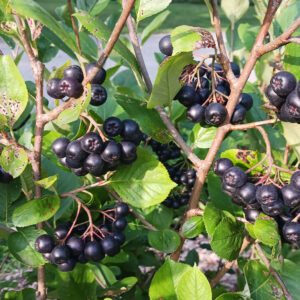
Crandall Clove Currant is one of our favorite berry bushes because it has so much to offer. The rich, flavorful black berries are one of the highlights of summer here, and we love eating them right off the bush. They’re also excellent for jams, syrups, pies, and wine. In spring, the bright yellow flowers fill the air with an incredible clove fragrance that’s unlike anything else we grow. As a North American native, it’s extremely hardy, naturally deer resistant, and finishes the season with beautiful fall color.
Why You’ll Love It
- Produces abundant crops of flavorful berries for fresh eating, jams, syrups, pies, and wine
- Fragrant yellow clove scented flowers in early spring that attract bumble bees and other pollinators
- Cold hardy and easy to grow
- Naturally deer resistant
- Beautiful fall color
- Self-fertile, so only one plant is needed
Fruit & Uses
Unlike many currants that are primarily grown for processing, Crandall Clove Currant produces rich, flavorful berries that are just as delicious fresh as they are in jams, syrups, pies, juice, and homemade wine. Its versatility and dependable production make it an excellent addition to almost any home garden.
Growing Information
Crandall Clove Currant grows well in full sun to partial shade and is hardy in USDA Zones 3–8. It adapts well to a wide range of soils and becomes quite drought tolerant once established. Like raspberries, it naturally spreads by underground suckers to form a larger patch over time, making it easy to expand your planting or create a productive berry hedge.
Mature Plant Size
- Height: 6–8 feet
- Width: 6–8 feet
Plant Size & Shipping
These are naturally grown bare-root plants, raised in our compost-rich nursery beds. Plants are approximately 24–36 inches or taller at shipping, although each plant will vary slightly in height and branching.
Each plant is dug while dormant and prepared for shipment during the fall or spring.
Frequently Asked Questions
Do I need more than one plant?
No. Crandall Clove Currant is self-fertile, so a single plant will produce fruit.
When will my plant ship?
Bare-root plants are shipped while dormant during the fall and spring shipping seasons. This is the safest and healthiest time to transplant them.
When will I get fruit?
You can expect plants to begin producing fruit the 2nd year after planting, with yields increasing as the plants mature.
Do the flowers really smell like cloves?
Yes! The bright yellow spring flowers have a sweet, spicy fragrance that’s remarkably similar to cloves, giving this currant both its common name and one of its most unique features.
Shipping & Planting Information
Our plants are shipped bare-root while dormant to give them the healthiest possible start. Learn when your plant will ship, how it will arrive, and what to do when it reaches your home.